

News | METRANS Researchers Awarded Multidisciplinary Research Grant from NSF
Stop the VideoNews
METRANS UTC
METRANS Researchers Awarded Multidisciplinary Research Grant from NSF
Thursday, October 8, 2015
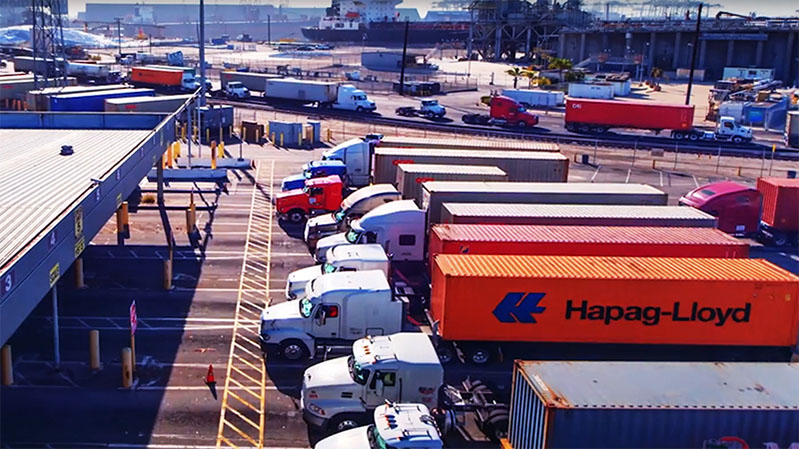
We are pleased to announce that METRANS Associate Director of Research Petros Ioannou, METRANS Associate Director of Special Programs Maged Dessouky, and METRANS Director Genevieve Giuliano have received an $800k research award under the National Science Foundation (NSF) Cyber-Physical Systems program, entitled, Cyber Physical Regional Freight Transportation System. The purpose of the research is to use optimization and control techniques, together with real-time simulation models, to improve performance of complex networks, in this case the network being the freight transportation system. The fundamental idea is to balance demand across routes, time periods and modes (rail and truck). This research will incorporate policy and institutional constraints directly into the optimization models. Ioannou, Professor, Electrical Engineering Systems and Director, Center for Advanced Transportation Technology, Viterbi School of Engineering (VSoE), University of Southern California (USC), will serve as Principal Investigator (PI).
This grant is important because “it represents the best of what can happen when we foster and support multidisciplinary research,” remarked Co-PI Giuliano, Professor and Ferraro Chair in Effective Local Government at the USC Price School of Public Policy. “Through our years working together in METRANS we have learned a lot about our respective fields, and that has led to ideas about how we might pool our knowledge and perspective to address new problems,” she added. “ This grant award is testimony that working across disciplines can pay off. One of the great things about cross-school research centers is the environment they provide for these types of collaborations.”
Dessouky, Co-PI, Professor at the USC Daniel J. Epstein Department of Industrial and Systems Engineering, VSoE finds this research particularly timely. “Today’s logistics environment is very fragmented resulting in a number of system wide inefficiencies. Taking a systems perspective and balancing the freight workload across mode and time has the potential to significantly reduce congestion and bottleneck points in the transportation network.” he notes. “A number of policy issues (e.g., what incentive structure must be created for participation) must be addressed by the research for the developed optimization and control algorithms to be applicable to the freight operating environment.”
News Archive
- December (1)
- November (6)
- October (4)
- September (1)
- August (3)
- July (4)
- June (3)
- May (7)
- April (8)
- March (10)
- February (8)
- January (7)
- December (7)
- November (8)
- October (11)
- September (11)
- August (4)
- July (10)
- June (9)
- May (2)
- April (12)
- March (8)
- February (7)
- January (11)
- December (11)
- November (5)
- October (16)
- September (7)
- August (5)
- July (13)
- June (5)
- May (5)
- April (7)
- March (5)
- February (3)
- January (4)
- December (4)
- November (5)
- October (5)
- September (4)
- August (4)
- July (6)
- June (8)
- May (4)
- April (6)
- March (6)
- February (7)
- January (7)
- December (8)
- November (8)
- October (8)
- September (15)
- August (5)
- July (6)
- June (7)
- May (5)
- April (8)
- March (7)
- February (10)
- January (12)
2026
2025
2024
2023
2022
2021
2020
2019
2018
2017
2016
2015
2014
2013
2012
2011
2010

Major Funders
Metrans Associate Partners